
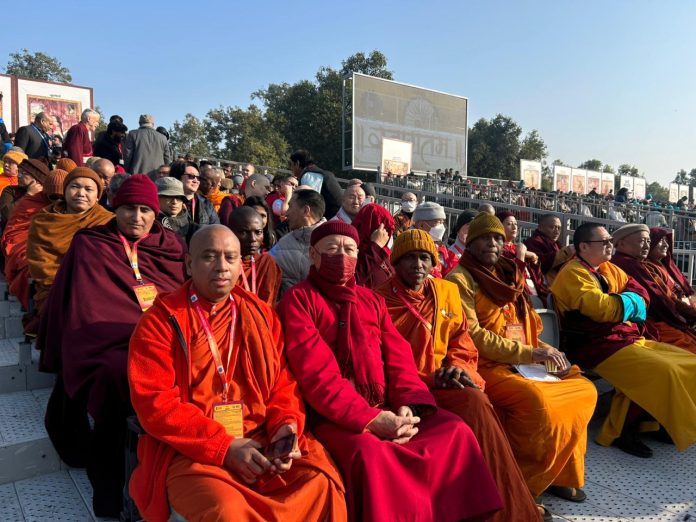


A key highlight of the Global Buddhist Summit was a visit by around 250 foreign monks and delegates to the Qila Rai Pithora Cultural Complex, where they paid their respects and offered prayers before the sacred relics of the Buddha. The exposition, inaugurated by Prime Minister Narendra Modi on 3 January 2026, drew delegates from India and overseas, many of whom spent more than two hours viewing the exhibition.
Participants were particularly moved by the historical narrative of the Piprahwa relics, including India’s efforts to recover and reunite the reliquaries that had been taken out of the country in 1898. Delegates praised the initiative, noting that it reflected India’s commitment not only to preserving its ancient heritage but also to ensuring the repatriation of sacred artefacts.
Many monks described the visit as deeply moving, with some chanting before the relics in a calm and contemplative atmosphere. “We are extremely fortunate to be given this rare opportunity to be blessed by the relics of the Shakyamuni and to see such a rich collection,” a senior member of the Sangha said. Another delegate described it as an unexpected spiritual dimension of the summit. Organisers later said the visit had been planned as a surprise, intended to complement the academic and philosophical discussions with a direct spiritual experience.
Another notable sideline event of the summit was the visit by around 60 monks from several countries to witness India’s Republic Day parade on 26 January. Their presence amid displays of military hardware and marching troops created a striking contrast, with many observers noting the symbolic juxtaposition of military strength and spiritual values. While India showcased its defence capabilities, the monks and nuns embodied ideals of peace and compassion, echoing messages often articulated by the Prime Minister on the relevance of the Dhamma in addressing global challenges.
Following the parade, several nuns from Vietnam were permitted to remain briefly as the Prime Minister walked past the seating area, allowing them to greet him. They later described the moment as memorable, saying it was a rare opportunity to see the Indian leader at close quarters.
Together, these events underscored the broader message of the Global Buddhist Summit, reflecting India’s dual identity as a nation grounded in spiritual wisdom and cultural heritage while also asserting its democratic strength and sovereignty on the global stage.