
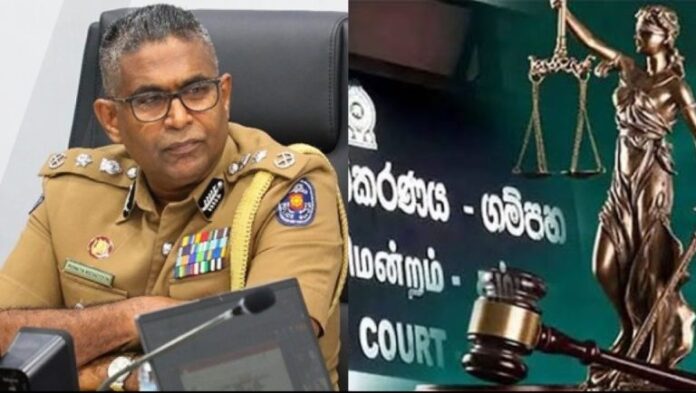

The Judicial Service Commission (JSC) has decided to transfer Gampaha Magistrate Bandula Gunaratne to the Judges’ Training Institute, following an inquiry into a series of orders issued in a heroin possession case and formal complaints submitted by senior police officials against the judicial officer.
The decision was taken after the JSC examined a dossier submitted by Inspector General of Police (IGP) Priyantha Weerasuriya, reviewed the disputed case records and considered the magistrate’s own observations on the matter.
The case and the orders
The controversy originated from a raid conducted on 6 May 2026 by the Gampaha District Crimes Investigation Division in Devalapola, Makalgamuwa, during which an individual was apprehended in possession of 130 mg of heroin. On 7 May, the Officer-in-Charge of the Anti-Corruption Unit filed two plaints against the suspect in the Gampaha Magistrate’s Court.
The suspect pleaded guilty to both charges, and the magistrate convicted him and imposed a fine of Rs. 5,000 along with a personal bail bond. However, after sentencing and the conclusion of proceedings, the magistrate recalled the case under Section 17(1) of the Code of Criminal Procedure. Asserting that the prosecution was harassing and driven by arbitrary quota-based raid targets, the magistrate ordered the raiding officers to pay Rs. 25,000 each in personal compensation to the accused, and directed that further compensation be paid to him from the Sri Lanka Police Reward Fund. The magistrate also ruled that no disciplinary action should be taken against the junior officers, or, if any was taken, that responsibility must fall on the highest-ranking officer who ordered the operation, down to the lower ranks.
The Police Department viewed the orders as deeply problematic, pointing out that the magistrate had directed officers to pay compensation and barred internal disciplinary action after the accused had already admitted guilt and been sentenced.
Police move for revision and the Court of Appeal referral
The Police Legal Division submitted the matter to the Attorney General on 15 July 2026, seeking a revision application against the magistrate’s order, and sent a reminder on 17 August.
When the case was called again in August, police legal representatives requested an opportunity under Section 17(3) of the Code of Criminal Procedure to submit facts, explaining that discussions were under way within the department to issue administrative circulars on raids. The magistrate agreed to defer the immediate execution of the penalties pending comprehensive guidelines from the IGP to streamline the filing of genuine cases.
On 21 October 2026, police legal officers informed the court that instructions and an administrative circular had been issued by the Deputy Inspector General. The magistrate, however, dismissed this as an inadequate “plaster” solution that did not satisfy the court’s requirements regarding target-driven raids, declined to accept it as compliance, and referred the matter concerning the IGP’s non-compliance with judicial orders to the Court of Appeal.
Complaint to the JSC
Following the escalation, the IGP formally reported the matter to the Secretary of the JSC, submitting a 10-page report accompanied by 19 annexures. The submission raised, firstly, a question of procedural and jurisdictional overreach, challenging whether a magistrate possesses the legal authority to compel the IGP to issue island-wide circulars, or to reopen a concluded case after sentencing in order to penalise arresting officers.
Secondly, it referred to allegations of prior misconduct in Kurunegala. The same judicial officer, while serving as the Kurunegala Magistrate, had been the subject of a formal complaint by the then Senior Deputy Inspector General of the North Western Province, Ajith Rohana, who alleged that the magistrate’s conduct obstructed police officers from carrying out their statutory duties.
Thirdly, the Senior Superintendent of Police in charge of the Gampaha Division had also filed a report alleging that the magistrate persistently refused to grant routine orders requested by the police. Finally, the IGP raised concerns of bias, stating that the magistrate’s punitive orders against the police leadership may have been influenced by resentment over these earlier complaints.
The JSC decision
The JSC subsequently called for formal observations and explanations from the Gampaha Magistrate on the complaints, documents and case records submitted by the police hierarchy. After examining the dossier, reviewing the disputed case records and evaluating the magistrate’s observations, the Commission decided to transfer the magistrate out of the Gampaha Magistrate’s Court.
Following the transfer, Kosala Senadheera has been appointed as the new Chief Magistrate of Gampaha by the Judicial Service Commission (JSC). The appointment letter, signed by JSC Secretary Prasanna Alwis, was issued on Friday (06).