
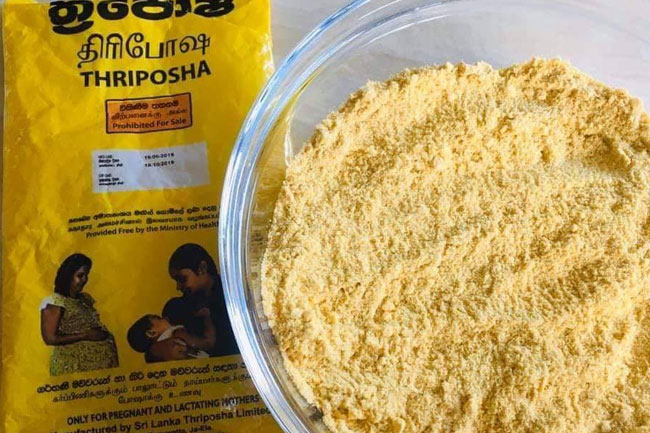

Sri Lanka Triposha Limited has been unable to meet more than half of the country’s monthly Triposha demand due to disruptions in maize supplies, with 2,000 metric tonnes of imported maize remaining held up at the port, company Chairman Amal Attanayake has revealed.
Appearing before the Committee on Public Enterprises (COPE), Attanayake said the failure to release the imported maize consignment had severely affected production, forcing the company to suspend operations for approximately two months despite the shipment having already arrived in the country.
He explained that the consignment, imported under a procurement process initiated in 2024, had encountered several administrative and legal obstacles, including issues involving the Attorney General’s Department and the requirement to obtain fresh Cabinet approval.
Delays arising from legal proceedings had also contributed to the disruption, he told the committee.
Attanayake said Triposha production requires five main ingredients: maize, milk powder, soya, minerals and vitamins. However, the shortage of maize has emerged as the primary obstacle to maintaining production.
He also raised concerns about the quality of locally sourced maize, revealing that samples collected from 15 farmers at a warehouse in Anuradhapura had all shown elevated aflatoxin levels.
According to the Chairman, inadequate storage facilities and the failure to implement appropriate storage procedures, including retaining raw materials for approximately 120 days before production, have made it difficult to rely entirely on locally produced maize.
He said the company consequently had to depend on imported maize with aflatoxin levels below five to ensure the quality and safety of the finished product.
To strengthen quality control, the company has purchased new testing equipment costing between Rs. 35 million and Rs. 40 million to improve its capacity to detect aflatoxin contamination.
Meanwhile, Attanayake revealed that the Ministry of Health requires approximately 1,194,000 packets of Triposha, each weighing 750 grammes, every month.
However, the company is currently able to produce only 49.5% of the required quantity.
He expressed confidence that production could be increased to 60% of demand by the end of the year.
COPE was also informed that the monthly requirement for a rice-based nutritional product intended for children aged between six months and three years stands at 593,460 packets, while the company’s production capacity is limited to 556,000 packets.
However, production of the rice-based supplement has been temporarily suspended after aflatoxin contamination was detected in the rice used as a raw material.
The Chairman said samples had been referred to research institutions for further examination before production could resume.
Addressing longer-term measures to improve production and reduce dependence on imports, Attanayake said the company plans to involve 7,500 local farmers in strengthening domestic raw material supplies.
The proposed initiative also includes developing storage facilities and improving agricultural supply chains to ensure the availability of raw materials that meet required quality standards.
He added that projects such as “Soya and Grow” are expected to support the development of a stronger domestic supply network while reducing import expenditure.