
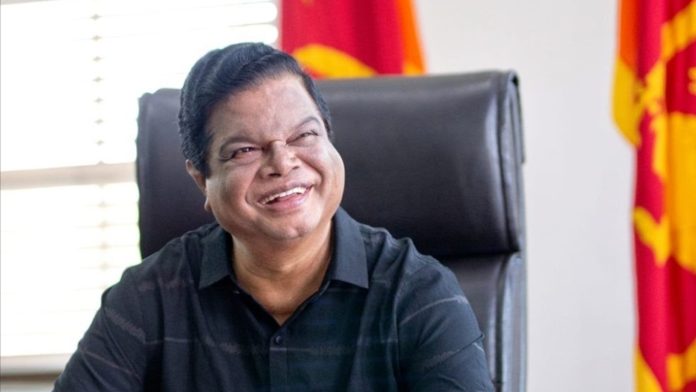


Former Minister Bandula Gunawardena has warned that Sri Lanka currently lacks both the rupee liquidity needed to run the Government and the foreign currency required to meet external payment obligations.
He said the country’s economic and fiscal position is so fragile that Sri Lanka does not have the capacity to withstand either internal shocks, such as landslides and floods, or external shocks, including foreign conflicts.
Explaining the severity of the situation, Gunawardena said the Government expects total revenue of Rs. 5.3 trillion in 2026. However, recurring expenditure alone — including public sector salaries, pensions, welfare programmes such as Samurdhi and Aswesuma, and interest payments on existing loans — is projected to reach around Rs. 5.6 trillion.
As a result, he said, the Government faces a deficit of between Rs. 300 billion and Rs. 400 billion even to meet its day-to-day operational expenses.
Gunawardena noted that, amid the ongoing financial crisis, the State can no longer rely on previous mechanisms such as excessive borrowing or printing money. Under the new Central Bank of Sri Lanka Act, he said, the Government is no longer able to print money at will, nor can the Central Bank extend direct credit to the Government.
He further pointed out that Sri Lanka is scheduled to resume external debt repayments only from 2028 onwards, significantly limiting the country’s ability to obtain foreign loans at present.
According to Gunawardena, between 185% and 190% of the Government’s borrowing needs up to 2030 will have to be met through domestic sources, while only a relatively small amount — around 110% — can be sourced externally.
The former Minister also said the Government does not have sufficient funds to provide relief to disaster-affected communities or to rebuild roads, houses, and schools damaged by natural disasters.
As a result, he said, the State has been compelled to rely on assistance from international organisations, as well as support from religious institutions and private donors, to provide relief to affected populations.