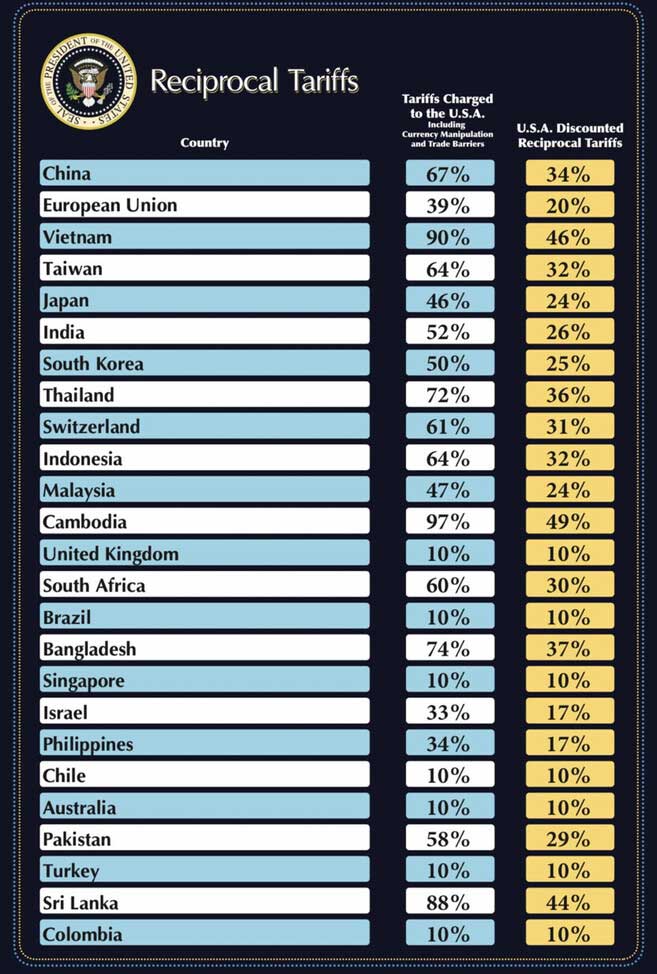
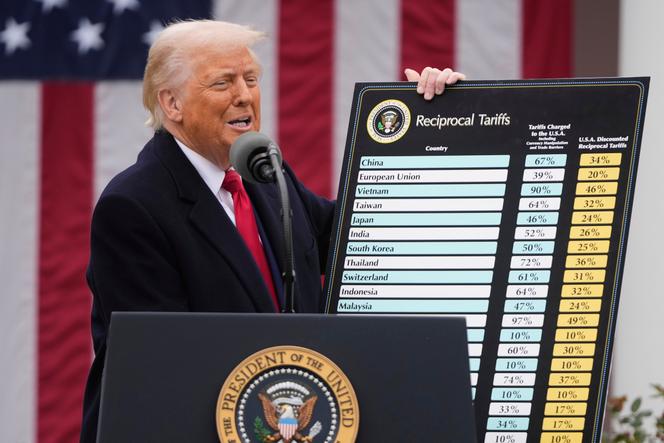

On 2 April President Donald Trump announced the implementation of a universal 10% tariff on all U.S. imports, along with additional “reciprocal” tariffs targeting countries with significant trade deficits with the United States. These reciprocal tariffs are calculated to match approximately half of the tariffs and non-tariff barriers that these countries impose on U.S. goods. As a result, Sri Lanka is now facing a 44% tariff on its exports to the U.S.
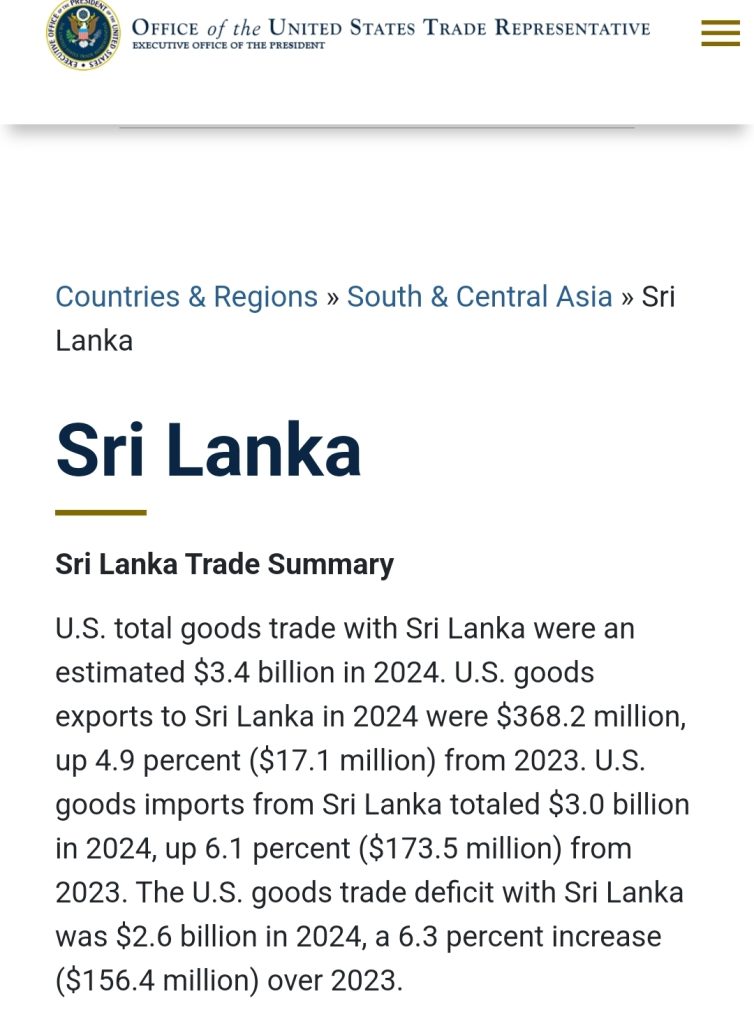
The U.S. is a crucial market for Sri Lanka, accounting for about a quarter of its total exports. The newly imposed 44% tariff is expected to have a significant impact on key Sri Lankan industries, particularly apparel, rubber, and plastic products. These sectors are especially vulnerable due to the substantial tariff differentials between Sri Lanka and the U.S.
The Office of the U.S. Trade Representative has cited various “unfair trade practices” as justification for these tariffs, including high tariffs, value-added taxes (VAT), non-tariff barriers, subsidies, and burdensome regulatory requirements imposed by trading partners. Sri Lanka’s reliance on para-tariffs and special commodity levies has contributed to higher tariff rates compared to the U.S., making its exports more susceptible to these reciprocal tariffs.
Economists warn that these tariffs could lead to a global trade war, with affected countries potentially implementing retaliatory measures. This escalation may disrupt international supply chains and dampen global economic growth. For Sri Lanka, a small economy with limited domestic demand and a high dependency on external value chains, the disintegration of the current global free trade system poses a significant concern.
In response, Sri Lanka is advised to phase out para-tariffs and strengthen trade relations with regional partners, particularly growing middle-income countries in East Asia. Negotiating free trade agreements and addressing existing trade barriers could help mitigate the adverse effects of the U.S. tariffs and promote sustainable export growth in a more protectionist global economy.