

The recent Cyclone Ditwah has been identified by the United Nations Development Programme (UNDP) as the most severe flooding disaster to affect Sri Lanka in decades.
According to a UNDP geospatial analysis, more than 1.1 million hectares — amounting to roughly 20 percent of the country’s land area — were inundated as a result of the cyclone.
The total number of Sri Lankans affected by the flooding is estimated at 2.3 million, with women forming the majority. The affected population includes approximately 1.2 million women, 522,000 children and 263,000 older persons, the report noted.
More than 60 percent of those impacted were living in the Colombo and Gampaha districts.
The UNDP further observed that over half of the affected residents were already grappling with multiple vulnerabilities prior to the disaster, including unstable income and high levels of debt.
Floodwaters encroached upon about 720,000 buildings — equivalent to one in every ten structures nationwide. More than 16,000 kilometres of roads were exposed to flooding, a distance the report likened to circling the island’s coastline more than twelve times.
The affected infrastructure also included over 278 kilometres of railway lines and 480 bridges.
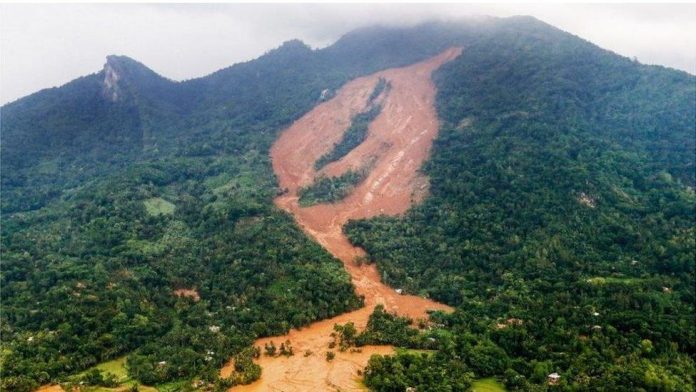
In the central highlands, the cyclone triggered around 1,200 landslides, according to the UNDP.
The agency stated that Ditwah had struck regions already weakened by years of economic strain. UNDP Representative Asuza Kubota stressed that Sri Lanka, still emerging from its most severe economic crisis, cannot afford to take on additional debt to finance recovery from such a large-scale natural disaster.
The UNDP has therefore called for increased early recovery assistance to support affected communities. It urged international partners to propose financing and innovative solutions that would enable Sri Lanka to recover swiftly without being pushed deeper into debt.