
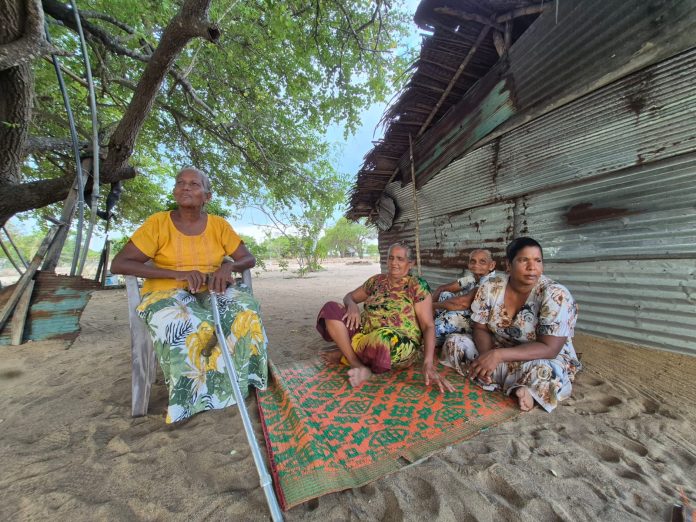

In the coastal village of Panama, Sri Lanka, women have carried the burden of resistance after thousands of acres were seized in the aftermath of war. Through protests, legal battles, and extraordinary resilience, they continue to fight for justice and their children’s inheritance.
BY Methmalie Dissanayake
In many parts of Sri Lanka, the military have occupied land from local populations in the North and East during the 30-year war that ended in 2009. Many of these lands have yet to be released.
However, the story of Panama is different. According to local residents, the land seizure here occurred after the war had ended. They alleged that in 2009 and 2010, the Navy and Air Force were involved in removing residents from their homes, allowing security forces to take over their lands. Army and Navy camps were subsequently established in the area.
Asoka Dayani, a lifelong resident and member of the Panama Women’s Committee, was born and educated in Panama and continues to live there with her husband and daughter. She highlighted the bitter irony of the post-war situation.
“Even during the war, we never faced such problems. The security presence that didn’t exist back then is being imposed today. After they forcefully took over the entrances to our lands, these camps—set up by the army—now protect them and prevent us from returning. That never happened during the war.”
A founding member of the women’s committee and a leading voice in the struggle for land rights, Dayani and other women in Panama have become frontliners in a fight that has lasted more than a decade. They have never given up.
This is their story—a decades-long struggle of women for their land rights, a women’s resistance against militarization.
The Inhumane Land Grab
According to the Law and Society Trust (LST), a total of 1,220 acres—comprising settlements, farmland, temples, forests under the Forest Conservation Department, mangroves, lagoons, and coastal areas—across the villages collectively known as Panama (Shastrawela, Ragamwela, Egodayaya, Horakanda, and Ulpassayaya) were appropriated by the security forces.
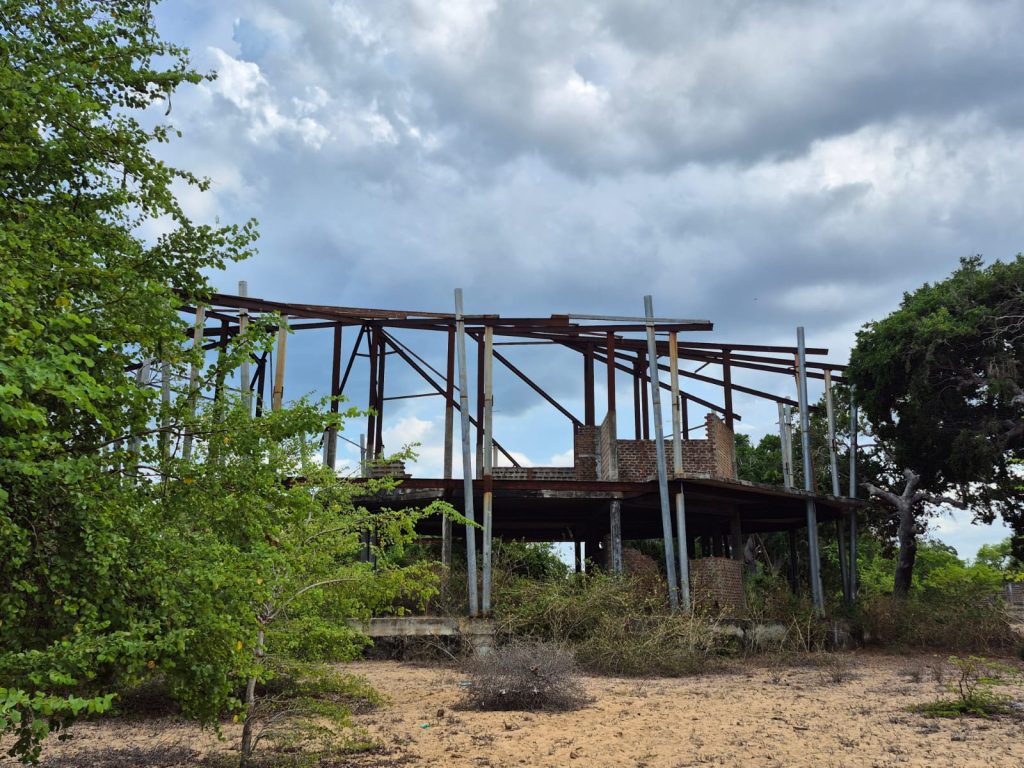
Lands in Shastrawela and Ragamwela were taken under Air Force control, while Egodayaya, Horakanda, and Ulpassayaya were placed under the Navy. Of these, 480 acres consisted of settlements and farmland, while 840 acres were forest lands—all seized and held by the armed forces.
In 2009, the Navy took over lands in Egodayaya, Horakanda, and Ulpassayaya—including farmlands and sites under the Department of Archaeology—claiming they were needed for the construction of a “Ranaviru Gammanaya” (War Heroes’ Village). By 2010, a Navy camp had been built instead. Today, the area includes Navy buildings and a tourist hotel, Panama Lagoon Cabana, operated by the Navy.
In the same year, homes and farmlands in Ragamwela and Shastrawela were burned by unidentified groups, and residents were forcibly evicted.
“One year after the war ended, on 17 July 2010, a group of heavily armed men wearing masks entered Ragamwela, set fire to seven houses and the local Buddhist temple, and assaulted villagers,” recounted G. Nilanthi Kusumalatha.
According to the women’s committee, the Air Force and the Special Task Force (STF) were responsible for burning their homes and forcibly evicting them, allegedly with the support of a former local council chairman with close ties to the Rajapaksa government. In total, 75 families from Shastrawela and 34 from Ragamwela were displaced.
The people of Panama lost their land rights and livelihoods during the presidency of Mahinda Rajapaksa. When the subsequent Yahapalana (Good Governance) government came to power, it failed to return the land, continuing the same policy of dispossession.
As a result, around 350 families who once depended on agriculture and fishing have been displaced for nearly 15 years. Their primary sources of income have been completely destroyed. The original purpose of this acquisition was reportedly to build a luxury holiday resort, disguised as the construction of an “International Relations Centre” to provide legal cover, the said.
This was further solidified on May 14, 2013, when former Lahugala Divisional Secretary L.A. Somarathna transferred 164 acres of land in Shastrawela to an authorised officer of the Presidential Secretariat.
Today, the lands under Navy and Air Force control—including those illegally transferred and private lands belonging to villagers—remain fenced off with electric barriers, displacing not only people but also wildlife.
Panama: A Land Rich in History and Heritage
To understand the fight, one must understand the land. Panama, located on Sri Lanka’s eastern coast near Arugam Bay, is the southernmost inhabited settlement of the Eastern Province.
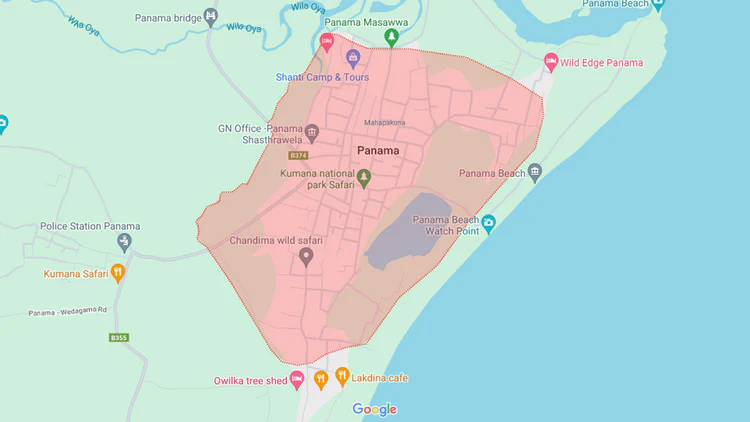
Historically, it served as the capital of the colonial Panamaipattu. Referred to as Panao, Panova, and Paneme in Portuguese and Dutch-era maps, this ancient village bears a rich cultural legacy. The residents are a diverse mix of Sinhalese and Tamils, renowned for rituals dedicated to the goddess Pattini Devi.
Folklore recounts that followers fleeing after the failed Uva-Wellassa Rebellion of 1818 settled here. Another legend connects the area to Princess Viharamahadevi, suggesting her boat came ashore here, not in Kirinde. The region is home to several historical and religious sites, including the Pattini Devalaya and Okanda Devalaya, where age-old rituals are still performed.
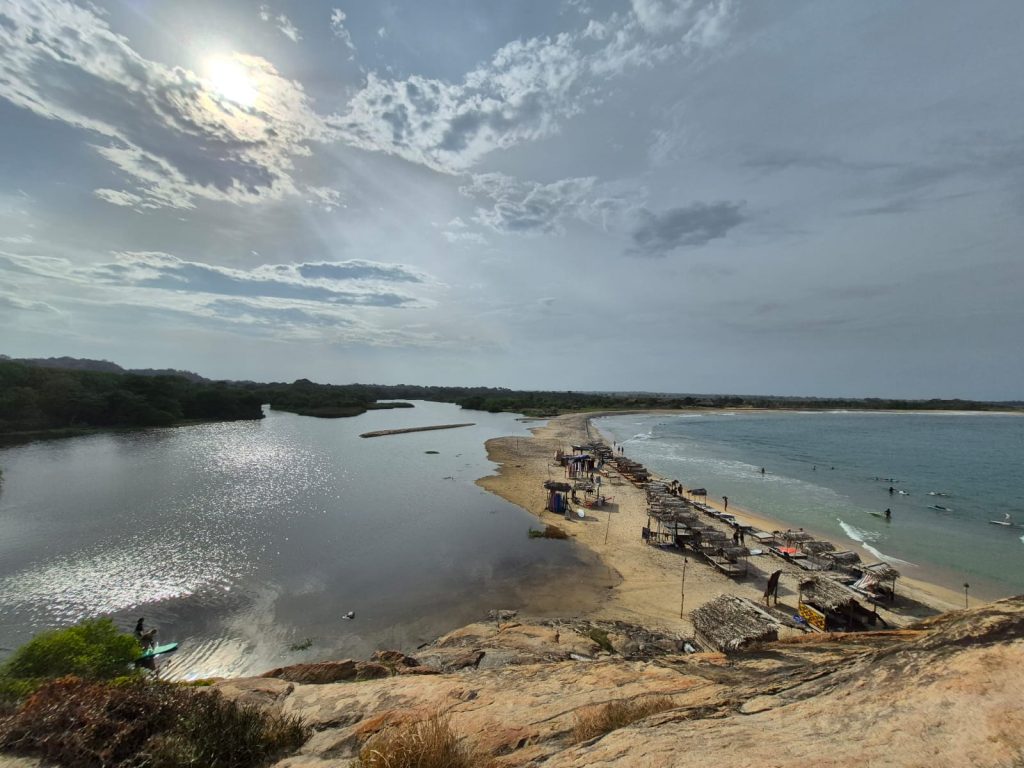
A striking feature of Panama is its surrounding ring of sand dunes. These dunes played a vital role in protecting the village during the devastating 2004 tsunami, sparing it from the destruction suffered by neighbouring areas.
The Battle for Land and Survival: Women’s Voices
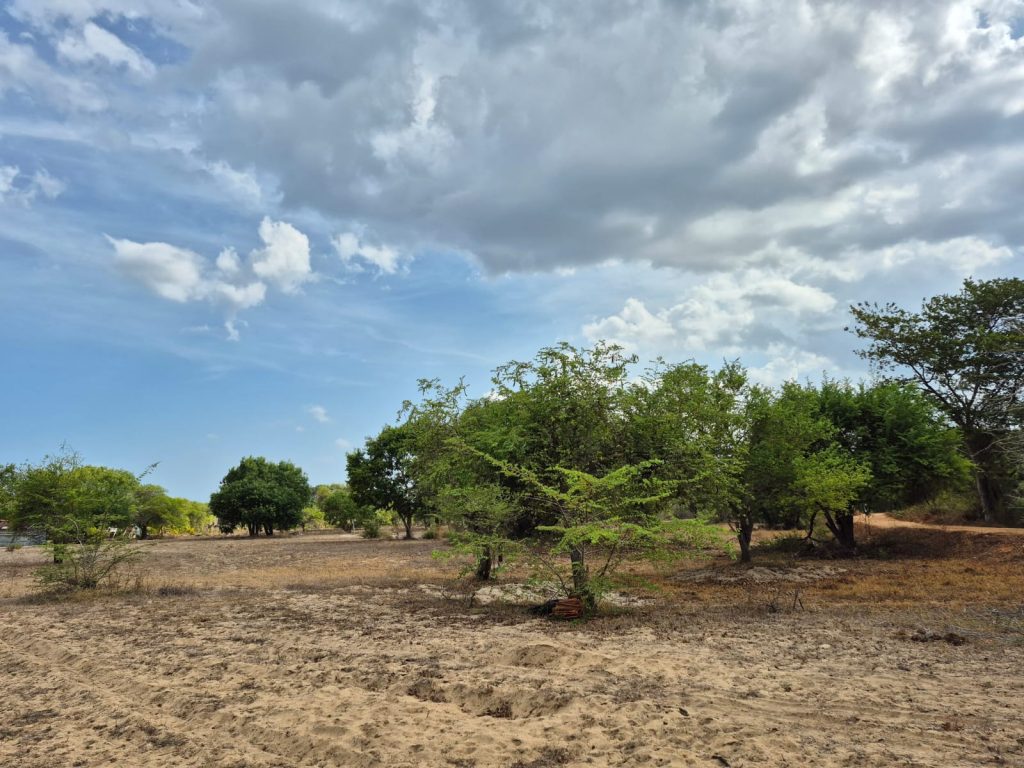
It is within this context of deep history and ecological significance that the ongoing land grabbing takes place. Panama’s natural beauty has made it a prime target for commercial interests, including, environmentalists warn, attempts to permit sand mining in the very dunes that protect the village.
At the heart of the resistance are the women of Panama.
“The women of Panama have organised countless forms of protest—campaigns, marches, demonstrations, and vigils,” said N. Ransika, a member of the women’s committee. “Now, with nothing left to do, they live in deep frustration and emotional distress… Their anguish is not born of anything else, but of losing the very land, homes, and livelihoods that sustained them for generations.”
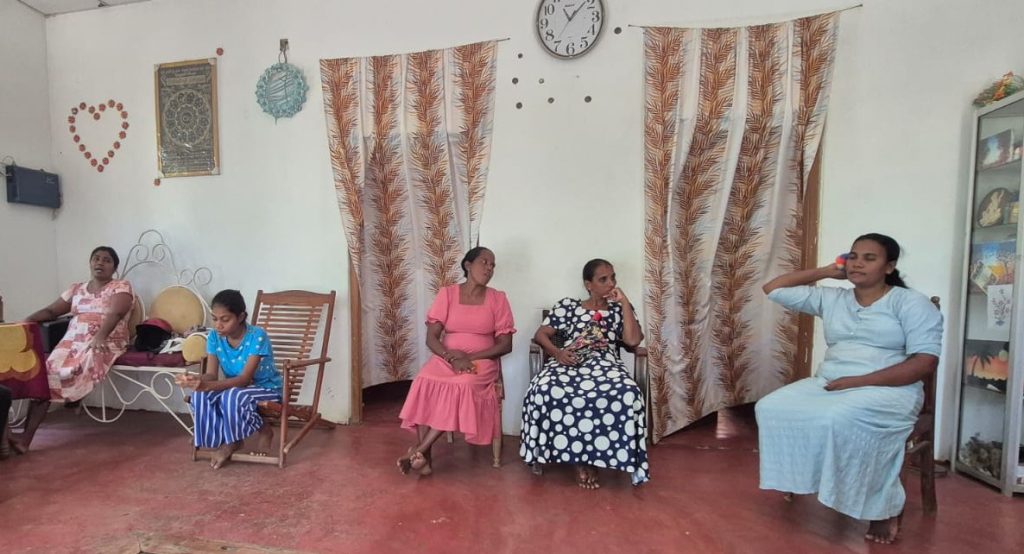
This loss of land imposes a unique and crushing burden. When the family’s primary source of wealth and food security is stolen, the responsibility to feed and care for the family falls squarely on the women’s shoulders.
“For generations, our people lived in these homes, on these lands,” explained Nilanthi Kusumalatha. “The lagoons where we caught shrimp and crabs, the fields we farmed… all of this has been stolen from us.”
This was not a life of dependency. It was a life of partnership, as Asoka Dayani, a leader in the committee, powerfully articulated: “We are women, and women traditionally carry the entire burden of the home. But in Panama, we also worked side-by-side with our men. We cultivated paddy, we worked the chena, we guarded the fields, we caught fish. But now we have to watch outsiders erect establishments.”
The theft of land is the theft of their children’s inheritance. “These politicians have robbed us of everything and made us destitute,” says N. Ransika. “This is not a small loss—our entire lives have been ruined. Because of this, we no longer have a single inch of land to give to our children.”
Resisting Militarization and “Development”
The women are clear-eyed about their antagonists: a combination of state military power and political corruption.
“Even during the war, we had no trouble here,” pointed out S. Nethmini Ayachana. “The security forces that didn’t exist then are active now. Why? Because after they forcibly took our lands, they need to protect them—to keep us out. The intelligence services and military camps they have built since 2009 aren’t here for national security; they are here to guard the lands they stole from us.”
This militarization is intertwined with commercial interests. “They first seized our land in 2009 claiming to build a ‘War Heroes Village.’ By 2010, it became a Navy camp. Now, they have built the ‘Panama Lagoon Cabana’ hotel,” the Women’s Committee states collectively. “We must ask: what economic benefit or advantage does this hotel, built on our stolen land, provide to us?”
In a country often fractured by ethnic divides, the Panama Women’s Committee is a testament to solidarity.
“Our women’s committee has Sinhala, Tamil, and Muslim representation,” noted Asoka Dayani with pride. “While the rest of the country sometimes burns with racism, Panama is exceptional, and that is mainly because of the women’s leadership.”
Their demand is unwavering. “We are only asking for our lands—our villages—back,” said J. Yejakala. “We know how to live. We know what to do to survive. We are not against progress. We would also like to start our own eco-friendly tourism… But we will only do it on our land, on our terms.”
A “Victory” in Court, A Betrayal on the Ground
The people of Panama have pursued justice through every available channel. In 2015, cabinet approval was granted to release these lands back to the residents. However, this decision was never implemented.
Consequently, case CA/Writ/352/2016 was filed in the Court of Appeal seeking a writ to enforce the cabinet decision.
On December 23, 2020, the Attorney General’s Department informed the court that the Divisional Secretary of Lahugala had notified them that the cabinet decision would be implemented. Based on this assurance, the court concluded the case, ruling that the petitioners’ request had been fulfilled.
But the lands were never returned.
Instead, residents report that approximately 50 acres of state forest land in the Shastrawela area—originally belonging to 75 farming families—have been illegally allocated among government officials and politicians.
In protest against these actions, women who were residents of Shastrawela have been encamped in the area for over 42 days.
Residents further allege that portions of the disputed land have been informally partitioned and allocated among a number of former and current local officials, state officers, and security personnel, with some plots reportedly registered under the names of relatives or associates. They claim these allocations involve individuals linked to local government bodies, land administration, forest authorities, village-level officials, and law enforcement. Community members say such actions have deepened fears that permanent private claims are being created over land they continue to demand be returned to its original inhabitants.
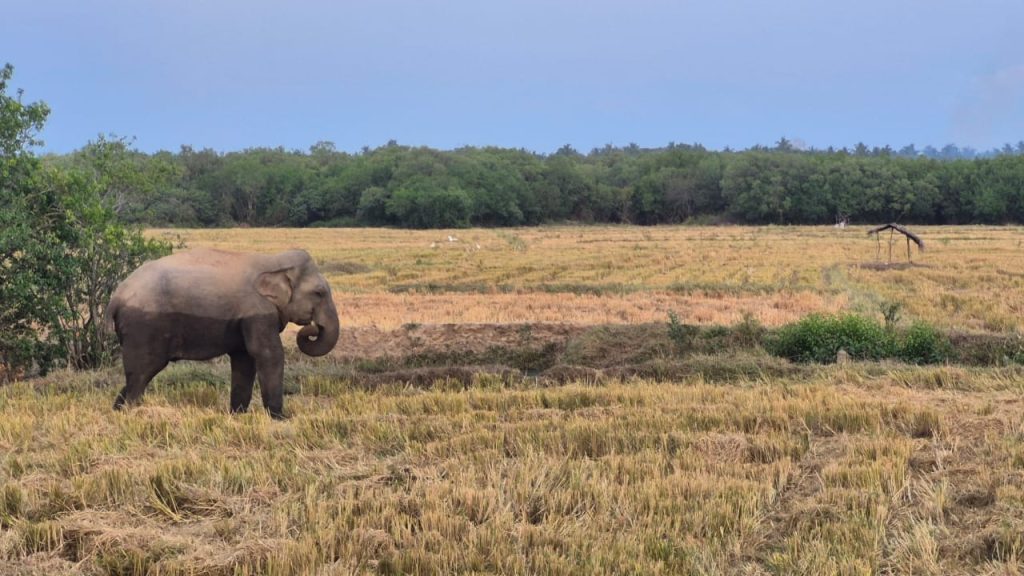
Furthermore, it is reported that the son of former State Minister Wimalaweera Dissanayake has also acquired land for hotel construction. Some of these lands have already been fenced off, cleared with bulldozers, and are under construction, completely blocking elephant corridors.
A System of Impunity: Legal and Human Rights Violations
The acquisition and clearing of these lands violate several key Sri Lankan laws.
- Forest Conservation Ordinance: Section 20 of this ordinance is violated, which prohibits clearing, building, constructing roads, or erecting fences within state forests.
- Coast Conservation and Coastal Resource Management Act: Any development activity in the coastal zone requires a permit and an Environmental Impact Assessment (EIA). All hotel construction and land demarcation have been carried out in violation of these provisions.
- Penal Code (Section 372 – Extortion): The forced acquisition of property from the people of Panama by state officials and politicians, causing them loss and intimidating them, constitutes extortion.
These actions also constitute a mass denial of Fundamental Rights guaranteed by the Constitution:
- Article 11: No person shall be subjected to torture or cruel, inhuman, or degrading treatment.
- Article 12: All persons are equal before the law and are entitled to the equal protection of the law.
- Article 14: Guarantees the freedom to engage in a lawful occupation and the freedom to reside anywhere in Sri Lanka.
The people of Panama have been denied all these rights.
The “Organisation to Protect Panama Pattuwa” filed a complaint with the Human Rights Commission of Sri Lanka (HRCSL) in 2025 (Ref: HRC/AM/105/10/B/OT) in collaboration with the National Fisheries Solidarity Movement (NAFSO), alleging that the
Divisional Secretary of Lahugala used false documents to transfer the ownershipof Panama lands to the Presidential Secretariat.
Investigating the matter, the HRCSL affirmed that the people’s claims were just and recommended their right to live on their lands be restored.
However, the state officials have failed to implement the HRCSL’s recommendations, until now.
Loss of an Ecological Treasure
The lands seized in Panama contain Dry-Mixed Evergreen Forests and Mangroves. They form an unfragmented, continuous forest corridor stretching from the coast deep into the interior, linking several critical protected zones:
- Kudumbigala-Panama Sanctuary
- Kumana National Park (which connects to Yala National Park)
- Kumbukkana Forest Reserve
- Lahugala-Kitulana National Park
This unbroken habitat, which once naturally protected settlements from human-wildlife conflict, is vital. The Kudumbigala-Panama Sanctuary and Kumana National Park are jointly declared as one of Sri Lanka’s six Ramsar Wetlands of international importance.
Furthermore, the Panama beach is a critical nesting ground for three threatened sea turtle species: the Green Turtle, the Olive Ridley Turtle, and the Leatherback Turtle. This land grab has destroyed the habitat these creatures depend on for survival.
The Unimplemented Decision
The 2015 Cabinet Decision, which resulted from the sustained struggle of the “Organisation to Protect Panama Pattuwa,” stipulated that all lands should be returned, with the exception of 25 acres for the Air Force.
Of the 365 acres the Air Force forcibly holds, 340 should have been returned to the 105 displaced families. More than eight years have passed, and no action has been taken.
It is alleged that implementation is being deliberately stalled because a large-scale tourism project is planned for the entire Eastern coastline. Officials and politicians, aware of this, are allegedly misleading the public while acquiring these lands for themselves.
This was further confirmed by the actions of former Minister Daya Gamage. After pledging to secure the rights of the Panama people during the 2015 elections, he himself prepared to launch a large-scale tourist hotel project in the area.
The fight continues, far from the halls of power, led by women who refuse to be erased.
“We emphasize that no other person, group, or company should come to start industries on our ancestral lands,” the women’s committee asserted. “We only want our heritage back. We want to return to that beautiful, peaceful, debt-free, and prosperous life we once lived.”
Forcibly Entering’ Their Own Lands
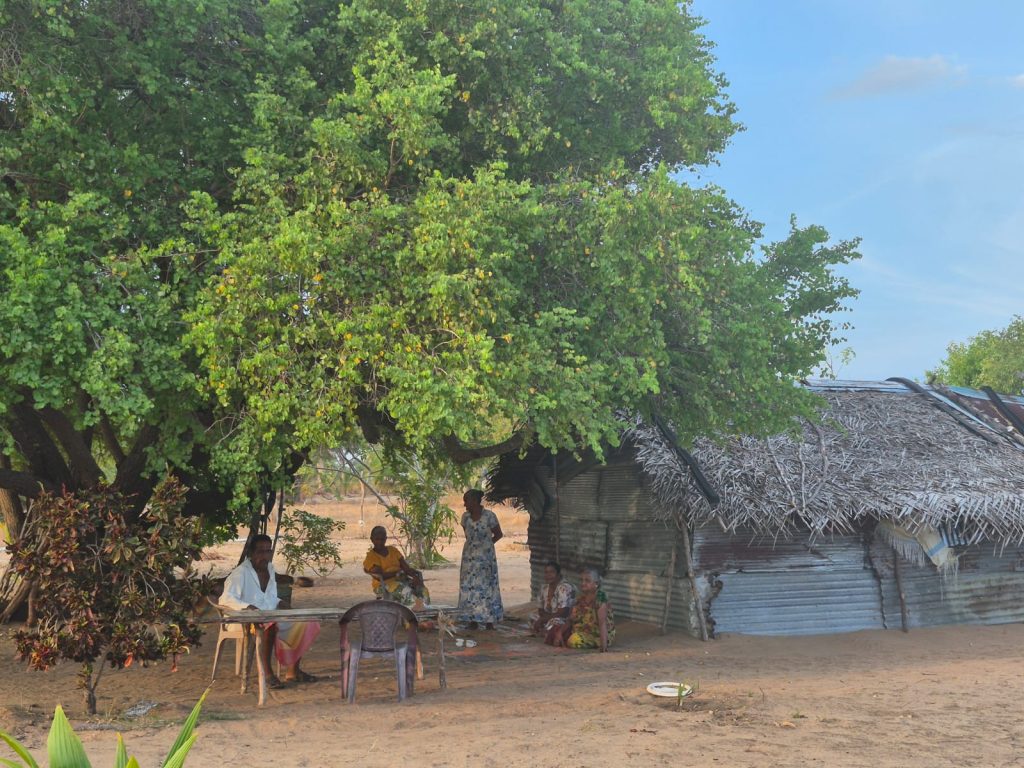
“In 2010, when the lands were taken, my husband was beaten and chased away. After that, we filed a case in the Pottuvil Court. We fought for six years, but not a single official took any action regarding these lands. Therefore, we had to forcibly enter our own lands. How ironic is that?” said J. Nandakumari, who lives in a leaf shelter in an area they call Peanut Farm.
On 26 March 2016, residents of Ragamwela, including Nandakumari and her husband, forcibly re-entered their lands. The Pottuvil Police and the Lahugala Divisional Secretary attempted to prevent them from entering and remaining there. Although the villagers resisted, the police obtained an interim order from the Pottuvil Magistrate to remove them.
Two days later, the protestors challenged the order in court. On 30 March, the Pottuvil Magistrate’s Court ruled in favour of the Ragamwela residents, granting them permission to enter and remain on their lands. The court also issued a written directive to the authorities to survey the lands and reach a resolution.
However, on 24 May 2016, the Lahugala Divisional Secretary issued a letter requesting the residents to vacate their lands, which the villagers refused to comply with. Instead, they cleared their lands to rebuild their homes and resume cultivation.
Despite having returned to their ancestral lands, the Ragamwela villagers still live under palm-leaf shelters. They have not received any assistance from any government to date, while the Air Force continues to occupy and control the surrounding area, including the village’s main entry point.
Families have been shattered, as many of their children have relocated elsewhere due to the land issue. The village now consists mainly of older residents; many are past their 50s, even 60s, living with their spouses in the temporary, small houses they built in Peanut Farm.
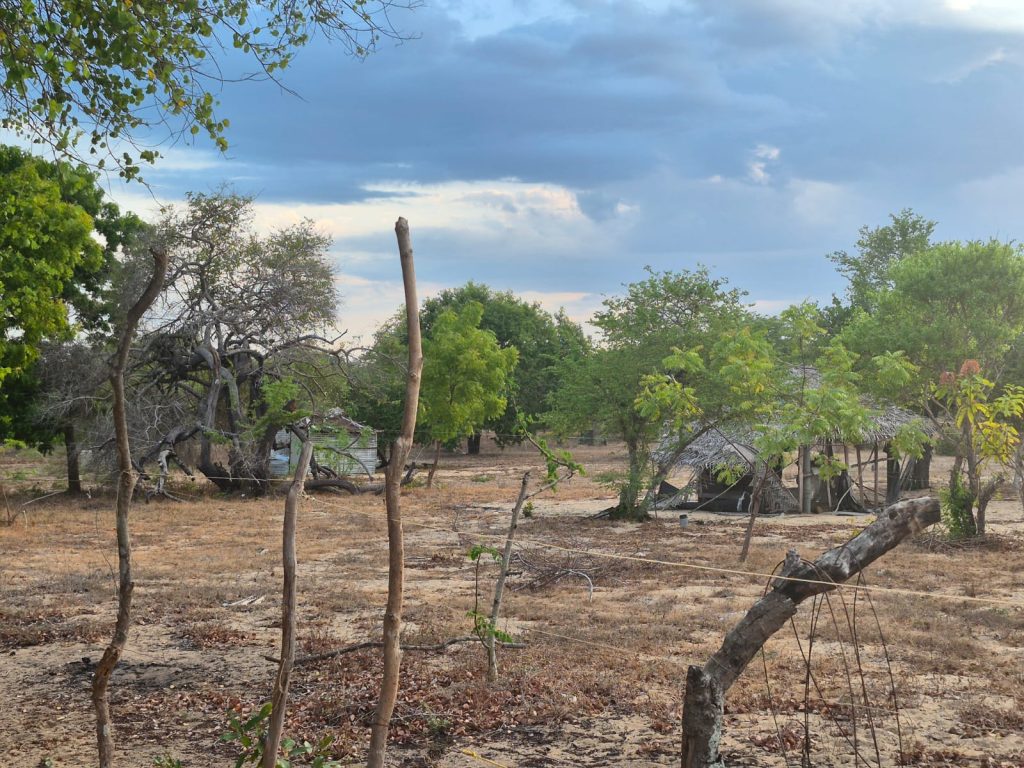
However, these women are adamant that they won’t leave the area.
Nandakumari, Sudunilane Peresankumari, and S. Sindrawathi are childhood friends who lived freely on this land before the seizures. After losing their lands, they are now living in those small shelters.
“This is actually sad. But now we are determined we won’t leave. They tried to evict us two times. This time we will never leave,” S. Sindrawathi said.
Nandakumari recounted how they, their mothers, and their grandmothers used to catch shrimp from the Panama lagoon, and how villagers went fishing in the Panama tank.
But now, those areas have been taken over by outsiders. The villagers can only watch as others do those activities, while they themselves are forbidden.
“The State has failed us, failing even now.”
Meanwhile, the women’s committee voiced serious concerns that the public coordinating committees within the Lahugala Pradeshiya Sabha—the very spaces where they should be able to raise their voices against this injustice—are being allegedly politicised, sidelining genuine community issues.
According to Asoka Dayani, the appointment of partisan individuals to these committees is undermining their fundamental purpose. “These committees are established to allow the public to voice their opinions freely, without political bias,” Dayani stated. “However, by filling them with party loyalists, the channels for genuine communication are being blocked.”
Dayani highlighted that residents of Panama face significant challenges related to land, health, and education. She argues that the current political nature of the committees prevents these critical local issues from being effectively addressed.
This failure to create impartial spaces has left the women of Panama deeply disappointed with the new government, which they feel is repeating the failures of the past.
“The State has failed us, failing even now,” Dayani said. She pointed out that this politicisation at the grassroots level is hindering any process of finding community-driven, participatory solutions.
They are now appealing to higher Government authorities to investigate the matter, ensure that the public coordinating committees can function as impartial bodies representing the true interests of the local population, and provide a solution for the decades-long land grabbing
“We are only asking for our lands—our villages—back,” said J. Yejakala. “We know how to live. We know what to do to survive.” They articulate an alternative vision: a sustainable, community-led future. “We are not against progress. We would also like to start our own eco-friendly tourism, to improve our lives and bring a good name to our country. But we will only do it on our land, on our terms.”
The ultimate goal of the women, the reason they have endured over a decade of struggle, is simple, profound, and non-negotiable. They do not want foreign companies or corrupt politicians to profit from their ancestral heritage.
“We emphasize that no other person, group, or company should come to start industries on our ancestral lands,” the committee said with resolute clarity. “We only want our heritage back. We want to return to that beautiful, peaceful, debt-free, and prosperous life we once lived.”
(This story is supported by Asia Pacific Forum on Women, Law and Development [APWLD]’s Feminist Media Fund for Alumni)