
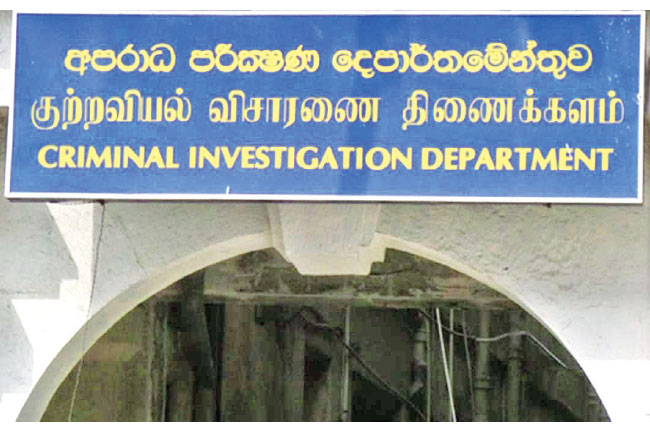


The Criminal Investigation Department (CID) has uncovered what it suspects to be a Dubai-linked money laundering network involving proceeds from drug trafficking, during investigations into the transfer of approximately US$715 million — equivalent to Rs. 214.7 billion — out of Sri Lanka under the guise of importing goods.
Senior Deputy Inspector General of Police in charge of the CID Asanga Karavita made the revelation before Parliament’s Committee on Public Finance (COPF), detailing a complex network involving 105 companies, 55 individuals, 227 bank accounts, around 24,300 Telegraphic Transfers (TTs), and 13 State and private banks.
According to Karavita, the transactions took place between January 2023 and March 2026, with funds transferred overseas purportedly to pay for imports that, according to reports submitted by Sri Lanka Customs, never arrived in the country.
The CID investigation has also uncovered allegedly forged invoices and Customs documents used to facilitate the transfers, while investigators are probing the suspected involvement of certain bank officials.
Karavita told COPF that Sri Lanka Customs had submitted three reports to the Inspector General of Police on January 20, February 23 and March 6 this year regarding funds transferred abroad for purported imports without the corresponding goods entering Sri Lanka.
“According to the first report submitted on January 20, there were 89 entities that had transferred funds through TTs for the importation of goods, but no goods had been brought into the country. The February 23 report identified another four entities, while the March 6 report identified another 12,” he said.
“In total, 105 companies were involved. In relation to those 105 companies, Rs. 214.7 billion — approximately US$715 million — had been transferred overseas through TTs. The reports stated that no goods had been imported into the country in return for those funds,” Karavita told the committee.
227 bank accounts and 24,300 transfers
Following the Customs reports, the Financial Crimes Investigation Division (FCID) of the CID launched an investigation into the transactions.
Karavita said investigators examined the directors and company secretaries associated with the 105 companies and found that only 55 individuals were connected to the entire group of companies.
The network had allegedly operated through 227 bank accounts.
“Approximately US$715 million had been transferred using close to 24,300 TTs. The period covered by these reports was from January 1, 2023 to March 2026,” he said.
The investigation further found that transactions had been processed through 13 major banks in Sri Lanka, including both State-owned and private banks.
One suspect linked to 43 companies
The CID subsequently focused its investigation on one of the companies involved in the transfers and arrested a suspect who, according to Karavita, was linked to as many as 43 companies.
The suspect is currently in remand custody while court proceedings are underway.
“He is connected to 43 companies and presents himself as an owner of those companies. When we investigated those 43 companies, we found that he had transferred approximately US$43 million through TTs during this period,” Karavita said.
Investigators subsequently uncovered how the alleged scheme had operated.
According to Karavita, the suspect received money from brokers in Sri Lanka and allegedly prepared fraudulent documentation required to justify overseas transfers.
“He obtained money from brokers in Sri Lanka, prepared the required documents fraudulently and submitted them to banks to make the TTs,” he said.
Giving an example, Karavita said invoices had allegedly been fabricated using computers and subsequently presented to banks.
“The brokers prepared fraudulent invoices using computers in their rooms and submitted them to banks. These activities had been carried out with the assistance of some bank officials,” he alleged.
Drug money allegedly sent to Dubai
The investigation then uncovered what the CID described as a connection between the transfers and a major drug trafficking network operating from Dubai.
Karavita said investigators had established that money linked to a powerful drug trafficker based in Dubai had allegedly been transferred from Sri Lanka to Dubai through the same mechanism.
“As we continued the investigation, we uncovered that money belonging to a powerful drug trafficker residing in Dubai and involved in drug trafficking had been sent to Dubai through this system,” he told COPF.
Of three main suspects identified in Dubai in connection with the investigation, two had already been brought back to Sri Lanka with the assistance of INTERPOL, Karavita said.
“Of the three main suspects who were in Dubai, we were able to bring two of them back to Sri Lanka through INTERPOL during the recent period. Both are currently in remand custody in connection with this incident,” he said.
According to information obtained during the investigation, money belonging to major drug traffickers was allegedly collected in Sri Lanka through brokers and deposited into accounts connected to the network before being transferred overseas.
Karavita said investigators were also examining whether the person facilitating the transactions knew that the money represented proceeds from drug trafficking.
“Whether or not this person had a proper understanding that the money had been earned through drug trafficking, what he did was collect the money, retain a commission and transfer the funds through TTs,” he said.
Forged Customs documents allegedly used
The CID also discovered that documents purportedly showing Customs clearance of imported goods had allegedly been forged.
Karavita said that when investigators examined the suspect’s office and other locations connected to the operation, they found that many Customs documents submitted in relation to the transactions were allegedly fraudulent.
“In some instances, banks had requested Customs documents. What we have uncovered is that those were also fraudulent Customs documents, prepared as forged documents and submitted,” he said.
The revelation raises questions over how thousands of transactions involving hundreds of millions of US dollars were processed through the formal banking system over several years using allegedly falsified supporting documentation.
Rs. 30 million found in three-wheeler leads to second probe
Karavita also revealed that the CID was investigating a separate but similar network following two complaints originating from the Kelaniya Police Division.
The investigation began after Rs. 30 million in cash was discovered inside a three-wheeler during an inspection.
“When the Rs. 30 million was investigated further, it was found that the money was being taken to be deposited with another company engaged in transactions of a similar nature,” Karavita said.
He said a person connected to that operation was also allegedly linked to drug use and trafficking.
The CID subsequently launched a parallel investigation into the company and discovered further overseas transfers.
“In that investigation, we found that approximately US$40 million had been transferred overseas in this manner through a leading State bank and two private banks during the relevant period,” Karavita said.
He said extensive investigations into the suspected networks were currently being conducted jointly by the CID’s Financial Crimes Investigation Division and the Proceeds of Crime Investigation Division.
The investigations are continuing into the companies, individuals, brokers, bank accounts and financial institutions allegedly involved in facilitating the transactions, as authorities seek to determine the full extent of the suspected money laundering operation and its links to drug trafficking networks.