

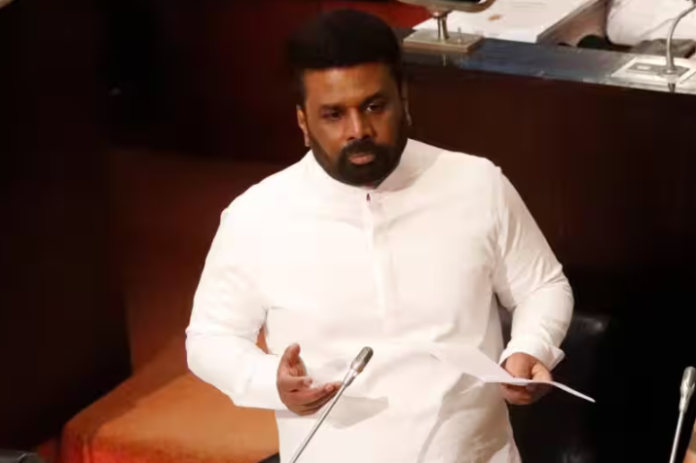

President Anura Kumara Dissanayake yesterday addressed Parliament, detailing a comprehensive plan to protect Sri Lanka from the escalating conflict in the Middle East, with particular emphasis on energy security, the safety of migrant workers and economic stability.
Speaking in the House of Parliament of Sri Lanka, the President said the Government was preparing for potential worst-case scenarios while taking immediate steps to ensure continuity in fuel supplies and safeguard foreign exchange inflows.
Energy reserves and storage expansion
The President stated that Sri Lanka currently has diesel stocks sufficient for 33 days and petrol stocks for 27 days, with an incoming shipment expected to increase petrol reserves to approximately 40 days. In addition, aviation fuel stocks are sufficient for 49 days, while crude oil supplies for refinery operations stand at 44 days.
He said a scientific management system has been introduced to optimise the use of limited storage capacity and prevent a recurrence of the fuel shortages experienced in recent years.
Addressing concerns over liquefied petroleum gas (LPG), the President acknowledged that existing storage capacity covers only about one week of demand. To mitigate this risk, the Government has secured the temporary use of 15,000 metric tonnes of private sector storage facilities in Hambantota. Emergency regulations have also been enacted to allow private suppliers, including Laugfs, to distribute gas to the local market more freely.
As part of long-term measures, the President said a Rs. 5 billion expansion of the Kolonnawa storage complex is scheduled for completion by 2027. Plans are also being advanced to increase refinery capacity to 100,000 metric tonnes.
With an estimated 1 to 1.5 million Sri Lankans employed in Middle Eastern countries, the President said their safety and welfare remain a priority.
He noted that 24-hour hotlines have been activated at Sri Lankan embassies in the region, as well as at the Ministry of Foreign Affairs and the Sri Lanka Bureau of Foreign Employment. A mechanism has also been established to enable relatives in Sri Lanka to report concerns and obtain updates through the relevant authorities.
The President further stated that a diplomatic roadmap has been prepared to engage international partners should evacuation efforts or enhanced protection measures become necessary.
President Dissanayake acknowledged that the crisis poses risks to Sri Lanka’s tourism sector and export economy. While 300,000 tourist arrivals had been projected for March, some cancellations have already been recorded. To support visitors currently in the country, the Government has authorised free two-week visa extensions.
He also pointed to disruptions at major transit hubs in Dubai, Doha and Abu Dhabi, which have affected connecting flights from Europe.
Economically, the President said the Government is closely monitoring the annual foreign remittance inflow of approximately $8.2 billion, warning that prolonged instability could impact earnings. Export sectors may also face pressure due to reduced demand in conflict-affected markets and the possibility of a wider global economic slowdown.
The President said the Colombo Port is assessing requests from international shipping lines seeking temporary storage for containers diverted from Middle Eastern ports. He stressed that any such arrangements would be carefully managed to prevent congestion or dumping.
Concluding his address, President Dissanayake said the Government remains committed to maintaining social and economic stability through advance planning, coordinated institutional response and international engagement.