
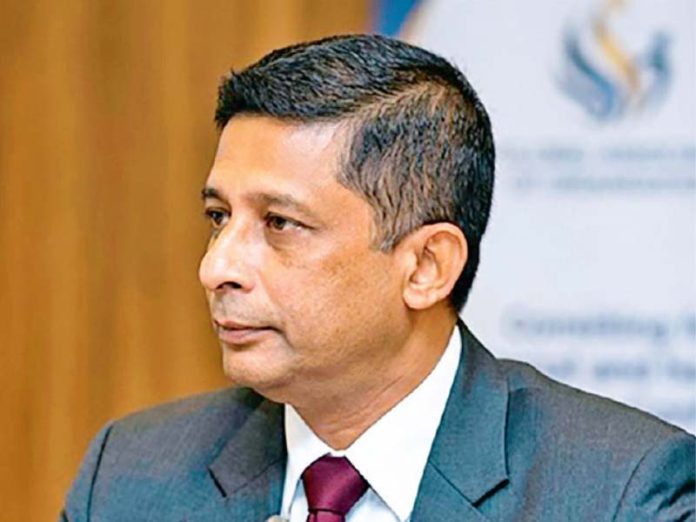

The Criminal Investigation Department (CID) and the Attorney General’s Department have presented a series of serious allegations before the Fort Magistrate’s Court regarding retired Major General Suresh Sallay. The former Director of the State Intelligence Service (SIS) was produced before Magistrate Isuru Neththikumara yesterday (22) under tight security provided by the Police Special Task Force.
According to the submissions made by Additional Solicitor General Dileepa Peiris and CID investigators, here are ten significant points stated in court, followed by the responses from the Magistrate:
- Principal Operational Force: The prosecution described Sallay as a ‘key driving force’ behind the 2019 Easter Sunday terrorist attacks, alleging that such an operation could not have occurred without high-level organised support.
- Misleading Critical Probes: The CID alleged that Sallay intentionally misdirected investigations into the Vavunathivu police killings and the Sainthamaruthu explosion to shield the actual perpetrators and divert public attention.
- Use of Intelligence Informants: Investigators stated that an intelligence informant, operating under Sallay’s direction, was allegedly used to show St Sebastian’s Church in Katuwapitiya—a major target—to the extremists before the bombings.
- Pressure over DNA Testing: The court heard that Sallay pressured investigators to conduct a third DNA test regarding ‘Sara Jasmine’ (Pulasthini Rajendran). This occurred after two previous tests failed to confirm she had died in the Sainthamaruthu blast.
- Command over Controversial Units: Prosecutors linked Sallay to intelligence officers from the Giritale Army Camp, alleging that groups under his command were involved in the abduction of Prageeth Ekneligoda and assaults on journalists Keith Noyahr and Upali Tennakoon.
- Intimidation of Witnesses: It was alleged that following previous hearings, an intelligence officer visited a witness’s home. Subsequently, five hand grenades and a pistol were found there, and six dogs at the residence were poisoned. The prosecution suggested these weapons were ‘planted’.
- Non-Cooperation by Military Intelligence: The Additional Solicitor General informed the court that while the army is a state institution, its intelligence units were not assisting the current investigation and were instead pressuring witnesses.
- Long-term Planning: The prosecution stated that the Easter Sunday attacks were the result of extensive planning that coincided with major political events, including the 52-day constitutional crisis and the vandalism of Buddha statues in Mawanella.
- Links to Azad Moulana’s Revelations: The court discussed claims originally made in a Channel 4 documentary regarding a meeting between bombers and intelligence officials, which allegedly took place with Saley’s knowledge.
- Obstruction of Justice: The Magistrate was informed that the suspect’s actions constituted a deliberate attempt to obstruct the judicial process, with the prosecution aiming to bring all responsible parties to justice before the eighth anniversary of the attacks.
Responses from the Magistrate
Magistrate Isuru Neththikumara provided several directives and observations in response to these submissions:
- Judicial Independence: The Magistrate emphasised that the court would not be influenced by external pressures or political narratives, stating that the law would be applied strictly based on the evidence presented by the CID.
- Protection of Witnesses: Expressing grave concern over the reports of poisoned dogs and planted weapons at a witness’s home, the Magistrate ordered the CID to provide immediate and comprehensive protection to all witnesses and their families.
- Order for Evidence Retrieval: The court directed the CID to obtain all necessary digital evidence and call records related to the communication between intelligence officials and the suicide bombers mentioned in the prosecution’s report.
- Inquiry into Military Conduct: The Magistrate ordered a separate inquiry into why military intelligence units were allegedly non-cooperative with the CID’s criminal investigation, noting that no institution is above the law.
- Remand and Detention: After considering the gravity of the allegations under the Prevention of Terrorism Act (PTA), the Magistrate authorised the continued detention and interrogation of the suspect to ensure the integrity of the ongoing investigation.