

A proposal that would allow telecommunications companies to avoid paying telecommunications levy on unpaid postpaid customer bills came under fire at the Committee on Public Finance (COPF), with Chairman Harsha de Silva questioning the rationale behind the move and warning against transferring corporate business risks to the public.
During deliberations on the Telecommunications Levy (Amendment) Bill, officials revealed that one of the key objectives of the proposed legislation was to permit telecom operators to deduct or avoid paying telecommunications levy on bills that remain unpaid by postpaid customers.
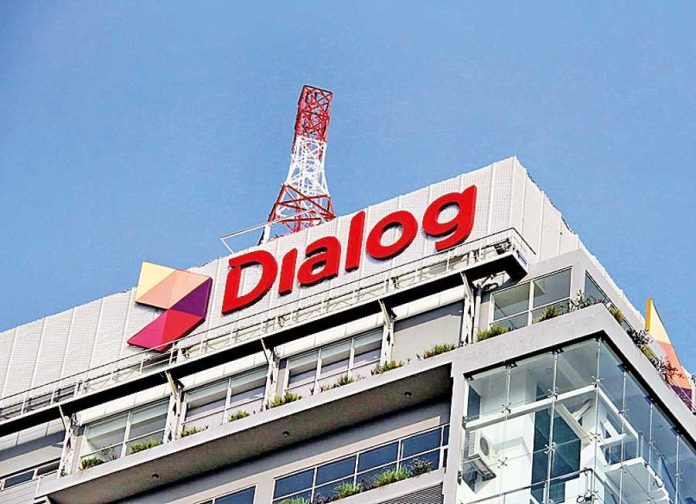
Questioning officials who appeared before the committee, de Silva revealed that since 2022, the only company that had requested the inclusion of such a tax provision was Dialog, one of Sri Lanka’s largest telecommunications operators.
An official from the Department of Fiscal Policy explained that the proposed amendment would allow telecom companies to reduce the amount of levy payable to the Government by accounting for debts identified as unrecoverable due to customer non-payment.
However, de Silva argued that telecommunications companies merely act as agents collecting taxes from the public on behalf of the State and should not be allowed to shift their commercial risks onto the Treasury.
He pointed out that under the Value Added Tax (VAT) system, businesses are generally required to pay taxes to the Government regardless of whether they have recovered the money from customers.
“In a market dominated by a limited number of operators, it is unacceptable to transfer business risks taken by private companies onto the Treasury and ultimately onto the public,” de Silva said.
The committee also raised concerns about the lack of any mechanism to verify whether claims of unpaid customer bills were genuine.
Questioning officials from the Telecommunications Regulatory Commission of Sri Lanka (TRCSL), de Silva asked whether the regulator had the capacity to determine which of the millions of subscribers had actually defaulted on payments.
In response, TRCSL officials informed the committee that Sri Lanka currently has approximately 29.53 million telecommunications subscribers, of whom only 4.34% are postpaid customers. However, they admitted that the commission currently has no technical mechanism to independently monitor and verify 100% of the unpaid debt claims submitted by telecom companies.
Although officials said such a system could be developed in the future, de Silva questioned why the concession was being introduced before an adequate verification framework was in place.
“If there is no mechanism, why are we providing this concession? Why are we granting this relief? Who requested it?” he asked.
De Silva further argued that the proposal could create legal loopholes that may allow companies to collect taxes from customers and subsequently avoid remitting those taxes to the Government.
He stressed that the law should apply equally to all businesses, noting that small business owners and shopkeepers are not permitted to avoid paying taxes simply because customers have failed to settle their bills.
Questioning the basis on which the Government was considering the concession, de Silva noted that Dialog is among the country’s most profitable companies and one of the largest firms by market capitalisation.
The Committee on Public Finance ultimately rejected the proposed amendment in its current form, citing the absence of a verification mechanism and concerns over the fairness of granting such a concession.
The committee directed officials to return with a revised proposal supported by a transparent framework and proper oversight mechanisms before any further consideration.