


The Supreme Court today (6 May) delivered a landmark judgment, ruling that environmental destruction in Nakolagane, in the Ehetuwewa Divisional Secretariat Division of the Kurunegala District, had violated the fundamental rights of local residents.
Delivering the verdict in Fundamental Rights petition SCFR 351/2022 filed by the Centre for Environmental Justice (CEJ), a three-judge bench comprising Justices Janak de Silva, K. Priyantha Fernando, and Sobitha Rajakaruna reaffirmed that environmental protection is a responsibility shared by both the State and individuals.
The case centred on the alleged illegal clearing of approximately 1,500 acres of forest land in the vicinity of the Nakolagane Rajamaha Viharaya. The court found that the Chief Incumbent (named as the 10th respondent) had unlawfully utilised State forest land not belonging to the temple for commercial cultivation and stone quarrying activities.
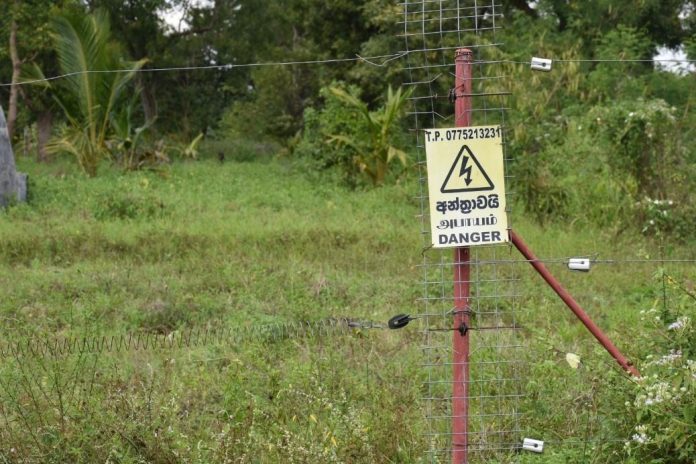
The Court accepted that the destruction of forest cover had damaged the catchment area of the Palukadawala Wewa, while the erection of illegal electric fences had intensified human-elephant conflict, posing a threat to the lives of residents.
Issuing a series of directives, the Supreme Court ordered that areas identified as forest land in survey maps, along with 55 hectares classified as chena and paddy lands, be immediately declared a sanctuary or an elephant management reserve under the Department of Wildlife Conservation.
The Court further directed that reforestation efforts be undertaken by the Wildlife Department, with the full cost to be borne by the Chief Incumbent.
It also ordered legal action to annul any unlawful sale or lease of temple lands carried out in violation of the Buddhist Temporalities Ordinance, with the Commissioner General of Buddhist Affairs instructed to take steps to reclaim such lands.
In addition, the Director General of Wildlife, the Central Environmental Authority, and the North Western Provincial Environmental Authority were ordered to publish public apologies in all three languages in a Sunday national newspaper for failing in their duties.
The Court further directed that criminal investigations be conducted under the supervision of the Inspector General of Police into the environmental damage and alleged cruelty to animals, with legal action to be instituted against those responsible.
The judgment reaffirmed that the protection of the environment is a fundamental right guaranteed under Article 12(1) of the Constitution, marking a significant step forward in environmental justice in Sri Lanka.
The petitioners were represented by a legal team led by Senior Counsel Ravindranath Dabare, instructed by Attorney-at-Law Nilmal Wickramasinghe, with Attorney Savanti Ponnamperuma also appearing.