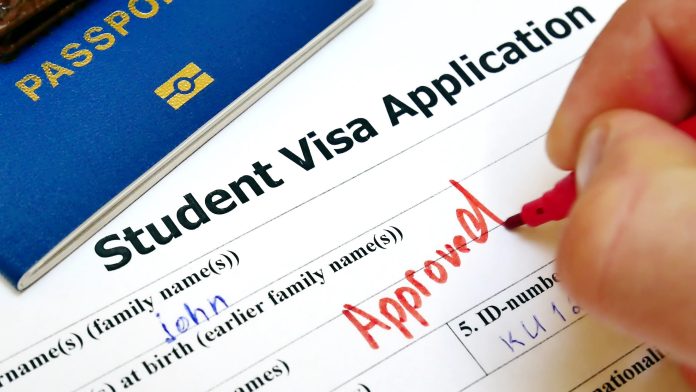

The Australian Department of Home Affairs has revised the evidence levels used to assess student visa applications, according to updates noted on the PRISMS system.
Although these levels are not officially published, they play a key role in determining the documentation required under the Simplified Student Visa Framework (SSVF).
Current Country Evidence Levels
Based on information shared within education and immigration networks, countries are currently categorised as follows:
- Level 1: Bangladesh, Sri Lanka
- Level 2: India, Bhutan, Vietnam, China, Nepal
- Level 3: Fiji, Philippines, Pakistan
These classifications form part of Australia’s risk-management approach to international education, reflecting past visa compliance and immigration outcomes.
How Evidence Levels Work
Both education providers and countries of citizenship are assigned evidence levels (1, 2, or 3). The combination of the two determines the level of documentation a student must provide.
Provider Evidence Levels
- Level 1: Low-risk institutions – minimal additional documentation required.
- Level 2: Moderate-risk institutions – further evidence may be requested depending on the student’s country.
- Level 3: High-risk institutions – strictest requirements and closer scrutiny.
Smaller institutions or those with limited visa outcome data are often placed in Level 2 or Level 3 by default.
Country Evidence Levels
A country’s classification is based on historical visa outcomes, considering factors such as:
- Cancellations and refusals
- Visa overstays
- Protection visa applications after study
- Fraudulent documentation (heavily weighted in risk assessment)
Interaction Between Levels
When assessing an application, Home Affairs considers both country and provider levels:
- Level 1 country + Level 1 provider: Streamlined process with minimal documentation.
- Mixed levels (e.g., Level 1 provider + Level 3 country): Additional evidence, such as proof of English proficiency or financial capacity, may be required.
- Level 3 country + Level 3 provider: Strictest requirements, greater scrutiny, and higher risk of delay or refusal.
Why It Matters
Students from higher-risk countries face stricter requirements, even if they enrol at well-known institutions, to safeguard the integrity of Australia’s international education system. Conversely, applicants from lower-risk countries enjoy a smoother, faster process.
The framework aims to balance accessibility for genuine students with measures that address higher risks of visa breaches, overstays, or fraud. (BIIC)